
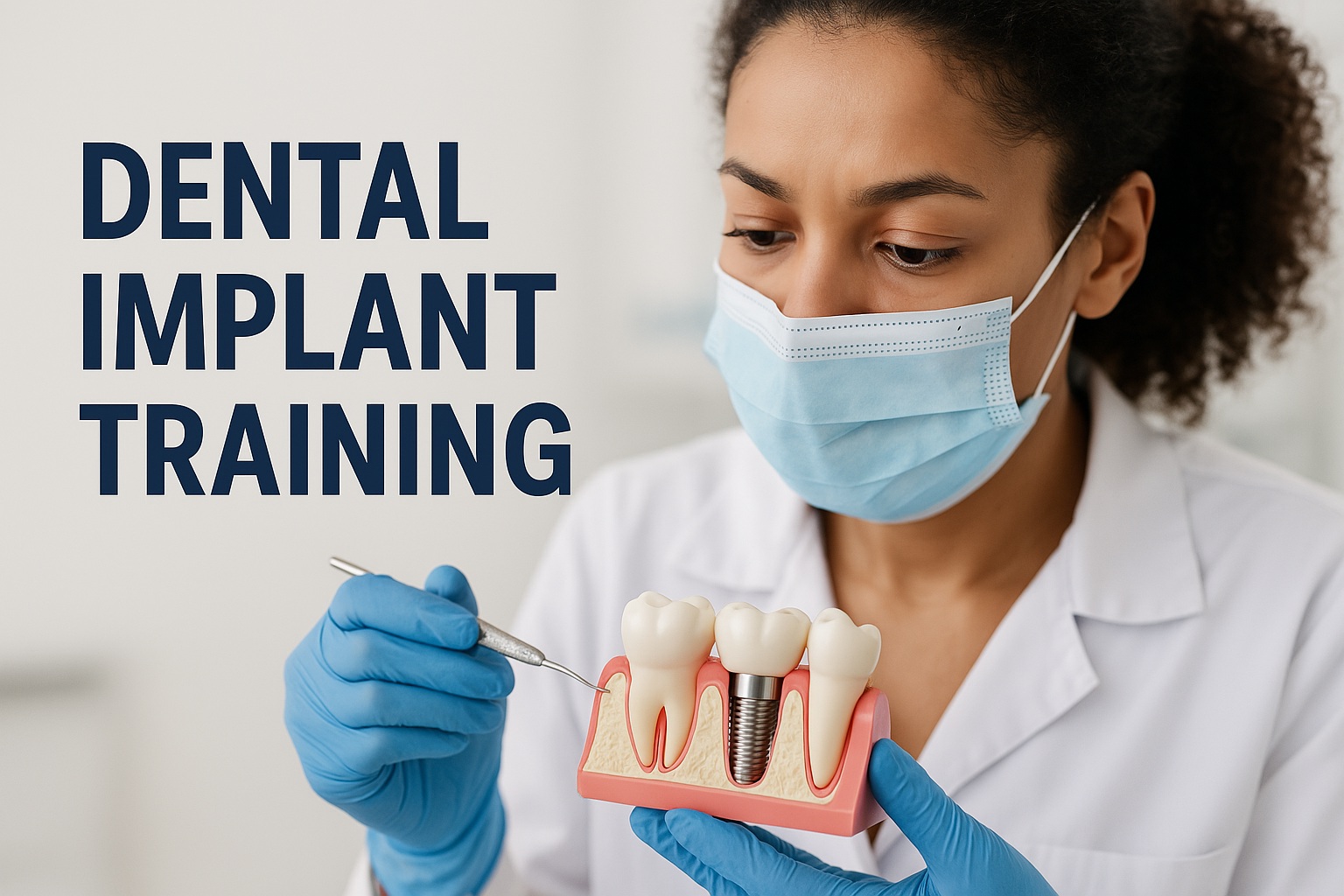
Dental implantology is an intricate skill that demands both solid theoretical knowledge and hands-on experience. While many courses provide lectures, simulations, and practice on models, the most valuable training comes from working on real patients.
In reality, many dental implant courses do not provide live patients, forcing dentists to find their own patients for practice—a challenging and time-consuming task. Moreover, some courses don’t even offer real patient training at all, which severely impacts the confidence dentists need to perform successful procedures.
The key to mastering dental implants is placing them on actual patients, not just on a pig jaw or model. Without this, a dentist’s ability to assess osseointegration and handle real-world complications remains limited.
The Challenge of Finding Your Own Patients for Training
Many dental implant courses leave dentists with the daunting task of sourcing their own patients. This process is not only time-consuming but also a logistical nightmare. Finding patients who are willing to volunteer for an implant procedure can be difficult, and it adds an unnecessary layer of stress. With some courses, this might involve convincing patients to trust a trainee with their procedure, which is not always an easy sell.
This is where courses that offer live patients are crucial, as they take this burden off the dentist, allowing them to focus on the actual learning experience rather than the logistical headache of patient recruitment.
Why You Can’t Learn Dental Implants from Models Alone
While dental models can provide basic practice, there’s no substitute for working with real patients. Models don’t simulate the complexities of human anatomy, such as bone density variations, gum tissue health, and the real-time issues dentists must deal with during surgery. How can you understand osseointegration—the process where the implant fuses with the bone—if you’re working with a fake jaw?
The ability to properly assess whether an implant is correctly placed can only be determined in the real world, after months of healing and follow-up. A model cannot give you that feedback.
Hands-On Experience in a Real Clinical Setting
True mastery of dental implants comes from practical, real-world application. Dental implants courses that offer live patient training expose dentists to clinical environments that simulate actual practice conditions. In these settings, dentists deal with real patient challenges, such as variations in bone structure, soft tissue handling, and anatomical differences.
Unlike models or simulations, working with live patients requires adaptability. It’s not just about placing implants; it’s about solving problems on the fly, thinking critically, and making quick decisions. The experience teaches dentists how to handle unexpected issues, from bleeding control to adjusting placement angles, something that models cannot replicate.
Expert Supervision and Immediate Feedback
One of the significant advantages of training with live patients is the expert supervision and immediate feedback provided throughout the procedure. Instructors help guide dentists through the critical steps, from pre-surgical planning to implant placement and follow-up. The feedback received during these sessions is essential for skill development, helping trainees adjust techniques in real time.
For example, if a dentist struggles with flap design or drill depth, instructors can provide guidance immediately. This supervision ensures that dentists don’t develop bad habits that could affect patient outcomes in a private practice. Real-time mentorship accelerates the learning process and helps prevent costly mistakes.
Building Confidence for Independent Implant Cases
There’s a significant difference between performing a procedure on a live patient and on a model. Working on real patients—who have their unique concerns, anatomical features, and challenges—gives dentists the confidence needed to handle future implant cases independently.
Training with live patients eliminates the uncertainty many dentists feel when they’re starting out. Many dentists hesitate to offer dental implants to their patients due to fear of complications or lack of hands-on experience. Training with real patients helps build confidence, ensuring that dentists are prepared to perform these procedures on their own without hesitation.
Better Case Selection and Treatment Planning
Training with live patients enhances more than just surgical skills. It also improves case selection and treatment planning. Dentists learn how to assess a patient’s suitability for implants, factoring in bone density, systemic conditions, and oral health. They also gain experience interpreting CBCT scans, selecting the appropriate implant size, and determining the optimal placement angle.
These skills are crucial for ensuring the long-term success of the procedure and for minimizing complications. Understanding how to plan for a patient’s specific needs can make the difference between a successful implant and a failed one.
Managing Patient Expectations and Communication
Implant procedures are complex and come with various risks. Communicating these risks and setting proper expectations with patients is a critical part of the process. By working with live patients, dentists can refine their communication skills. They learn to explain the procedures in understandable terms, address patient concerns, and set realistic expectations for both the surgery and recovery.
Moreover, these courses teach dentists how to guide patients through post-operative care, ensuring that patients are well-informed about their recovery, which significantly improves healing and the overall success rate of the implant.
Higher Success Rates and Clinical Outcomes
Dentists who have had the opportunity to work with live patients typically achieve better clinical outcomes. The hands-on experience they gain allows them to refine their techniques and make more accurate implant placements. This leads to improved osseointegration and fewer complications in the long term.
Additionally, by managing real-life challenges, such as soft tissue handling and bleeding control, dentists are better prepared for the complexities they’ll face in their own practices.
A Competitive Advantage in Implant Dentistry
As the demand for dental implants continues to grow, the competition for patients is also increasing. Patients tend to seek out providers who have proven experience, especially when it comes to complex procedures like implants.
Completing a dental training program that includes live patient experience gives dentists a competitive edge. By showcasing their hands-on experience, dentists can build their reputation and market their skills more confidently. Patients are more likely to trust a dentist who has performed implants on real patients than one who has only worked with models.
Conclusion
Training with live patients is essential for mastering dental implants. It allows dentists to gain the hands-on experience needed to succeed in real-world practice while providing the mentorship and confidence necessary for performing successful implant procedures. Dental training courses that offer this type of training not only help dentists improve their clinical outcomes but also set them apart in an increasingly competitive market. Investing in a program that provides live patient experiences ensures that dentists are well-equipped to meet the demands of implant dentistry and offer the best possible care to their patients.